

Introduction
Backlinks remain one of the most influential ranking factors in SEO, shaping the strength of your backlink profile and how search engines evaluate your website. They help search engines understand which websites are trustworthy, authoritative, and worth ranking higher. But despite how widely backlinks are discussed, many strategies still rely on the wrong signals.
One of the most common misconceptions is simple: the higher the Domain Rating (DR), the better the backlink. This belief has shaped how many businesses approach link building, often leading to wasted budgets and weak results.
In reality, evaluating backlinks requires a broader perspective. Three key factors define their true value:
- Domain Rating (DR)
- Organic Traffic
- Relevance
Each of these plays a different role. When combined correctly, they create a backlink profile that drives rankings, traffic, and long-term SEO growth.
A strong backlink profile is not built on one metric—it’s built on balance.
What is Domain Rating (DR)?
Domain Rating (DR) is a metric developed by Ahrefs to measure the strength of a website’s backlink profile. It is calculated on a scale from 0 to 100, with higher scores indicating stronger authority.
The DR score is based on:
- The number of referring domains
- The authority of those domains
- The way links are distributed across the web
Because of its simplicity, DR quickly became one of the most widely used metrics in link building. It allows SEO professionals to evaluate websites at a glance and compare opportunities efficiently.
Why DR Became Popular
DR offers a clear and fast way to estimate a website’s authority. Instead of analyzing each backlink manually, marketers can use a single number to guide decisions. This is especially useful when working with large-scale outreach campaigns.
For agencies and SEO teams, DR also provides:
- A standardized benchmark
- A way to filter low-quality sites
- A simple metric to communicate value to clients
However, this convenience comes with trade-offs.
Pros of DR
- Easy to understand and compare
- Useful for quick filtering
- Helps identify high-authority domains
Limitations of DR
- Can be artificially inflated through link manipulation
- Does not reflect actual search performance
- Ignores traffic quality and relevance
- Not a direct Google ranking factor
A website can have a high DR and still perform poorly in search results. This often happens when the backlink profile is built on low-quality or irrelevant links.
DR is a helpful signal—but on its own, it does not guarantee SEO value.
The Role of Organic Traffic in a Backlink Profile
Organic traffic represents the number of real users visiting a website from search engines. Unlike DR, it reflects actual performance and visibility in Google.
This makes traffic one of the most reliable indicators of a website’s quality.
Why Traffic Matters More Than “Empty Authority”
A website with consistent organic traffic has proven that it can:
- Rank for relevant keywords
- Attract users
- Maintain visibility over time
This is something DR alone cannot show.
Backlinks from traffic-driven websites tend to carry more weight because they come from pages that are already trusted and indexed by search engines.
Benefits of Traffic-Driven Backlinks
- Referral potential: Users can click through to your site
- Stronger ranking signals: Links come from pages that already rank
- Higher trust: Indicates real activity and engagement
Traffic also helps validate whether a website is actively maintained or simply exists to sell links.
Red Flags to Watch
Not all traffic is valuable. You should be cautious of:
- High DR websites with little or no traffic
- Sudden traffic spikes followed by drops
- Traffic coming from unrelated or low-quality keywords
For example, a site might have traffic from random global keywords that have nothing to do with your niche. In such cases, the SEO value of the backlink is limited.
Traffic turns authority into something measurable. Without it, DR is just a number.
Why Relevance Matters Most in a Backlink Profile
Relevance is the most important and often overlooked factor in link building.
It defines how closely a linking website or page aligns with your topic, industry, or niche. Search engines use relevance to understand the context of a backlink and determine how much value it should pass.
How Google Evaluates Relevance
Google analyzes multiple signals to determine relevance, including:
- The overall topic of the website
- The content of the linking page
- The surrounding text where the link appears
- The relationship between keywords
This means that not all backlinks are equal, even if they come from authoritative domains.
Types of Relevance
- Niche relevance: The website operates within your industry
- Content relevance: The specific page matches your topic
- Contextual relevance: The link is placed naturally within relevant content
The strongest backlinks usually combine all three.
Why Relevance Matters
- Sends clear topical signals to search engines
- Improves keyword-specific rankings
- Creates a natural and sustainable link profile
- Reduces the risk of penalties
For example, a backlink from a marketing blog to an SEO article is far more valuable than a link from an unrelated niche, even if the latter has a higher DR.
Relevance amplifies the impact of every backlink. Without it, authority and traffic lose much of their value.
DR vs Traffic vs Relevance: Side-by-Side Comparison
Before comparing these factors directly, it’s important to understand that each one measures a different aspect of backlink quality.

DR focuses on authority, traffic reflects real performance, and relevance defines contextual value.
Looking at them side by side makes it easier to see how they contribute to a strong backlink profile.
| Factor | Strengths | Weaknesses | SEO Impact |
| Domain Rating | Easy to measure | Can be manipulated | Medium |
| Traffic | Reflects real users | Can mislead if irrelevant | High |
| Relevance | Highly targeted | Harder to quantify | Very High |
This comparison highlights a key insight: not all metrics contribute equally to SEO success.
What Actually Drives a Strong Backlink Profile?
A strong backlink profile is built by combining authority, performance, and context.
Focusing on just one factor creates an incomplete strategy. Real results come from integrating all three.
The Ideal Backlink
The most effective backlinks typically have:
- Moderate-to-high DR
- Stable and relevant organic traffic
- Strong topical alignment with your niche
This combination ensures that the link is both trusted and contextually meaningful.
Real-World Examples
- High DR, low relevance:
A link from a general news site to a niche SaaS page may have limited impact. - Low DR, high relevance:
A link from a niche blog can significantly improve rankings for specific keywords. - Balanced backlink:
A relevant site with solid traffic and good authority delivers the strongest results.
These examples show that value is not determined by a single metric, but by how well all factors align.
Common Mistakes in Link Building
Even experienced marketers fall into common traps when building backlinks.
1. Chasing DR Only in Your Backlink Profile Strategy
Focusing exclusively on DR often leads to acquiring links that look strong on paper but deliver little real impact.
2. Ignoring Traffic Quality in a Backlink Profile
Not all traffic is valuable. Links from irrelevant or low-quality traffic sources can weaken your profile.
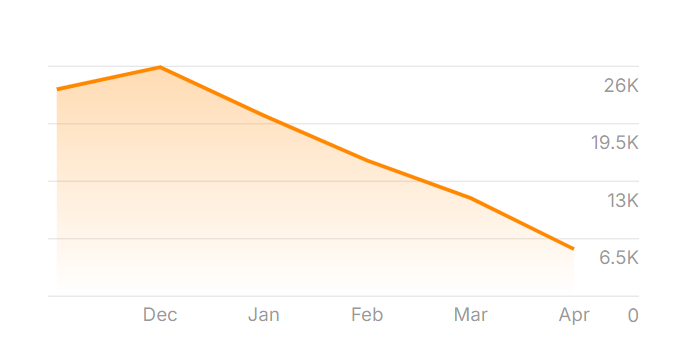
A drop in organic traffic is often a warning sign that the site has lost rankings or visibility. Getting backlinks from such sites carries risk, as their declining performance may reduce the value of your link over time.
3. Buying Links from Unrelated Niches
This creates an unnatural backlink profile and reduces the effectiveness of your SEO strategy.
4. Over-Optimizing Anchor Text
Using too many exact-match anchors can trigger penalties and reduce trust.
Avoiding these mistakes is essential for building a sustainable backlink profile.
Practical Strategy for Building a Strong Backlink Profile
An effective link-building strategy should prioritize long-term results over short-term metrics.
Core Principles
- Focus on niche-relevant websites first
- Use DR as a filtering metric, not the goal
- Prioritize sites with consistent organic traffic
- Build contextual links within high-quality content
- Diversify backlink sources to maintain natural growth
This approach ensures that every backlink contributes to rankings, not just vanity metrics.
Tools to Evaluate Your Backlink Profile
Accurate data is essential for making informed decisions.
Recommended Tools
- Ahrefs – Analyze Domain Rating and traffic trends
- SEMrush – Evaluate authority and keyword visibility
- Google Search Console – Track real performance and link impact
Using these tools together provides a complete picture of your backlink profile.
Conclusion: What Defines a Strong Backlink Profile
Domain Rating alone is not enough to build a strong backlink profile.
Organic traffic validates whether a website actually performs in search. Relevance determines how much impact a backlink will have on your rankings.
The best backlinks exist at the intersection of authority, traffic, and relevance.
When these three factors work together, they create a profile that drives sustainable SEO growth.
Need Help With Link Building?
Building the right backlink profile takes time, strategy, and experience.
Upvelix helps you secure high-quality, relevant backlinks that are designed to improve rankings—not just metrics.